



Published: Oct 20, 2026
When it comes to improving students’ reading comprehension, a crucial piece of the puzzle is fluency. There is a science to teaching reading called, well, the Science of Reading. The decades of research touting systematic, intentional reading instruction can be illustrated in Gough and Tunmer’s Simple View of Reading (SVR). The Simple View of Reading states that reading comprehension (RC) is a product of decoding or word recognition (D) and language comprehension (LC).
D x LC = RC
The left-hand side of the equation, the combination of word recognition and language comprehension skills, sums up fluency well. Fluency is the ability to read text at a conversational rate with automaticity, accuracy, and expression.
How is reading fluency determined?
Learning to read is not a natural process for our human brains. So fluency improves in stages as learners solidify their decoding skills, moving from the sounds of letters to whole words. The three main components of fluency are accuracy (decoding), rate (speed), and prosody (expression or affect). As learners practice decoding, their accuracy rises. Similarly, with stronger word recognition, their speed increases, leading to greater automaticity. Known as the automaticity theory, the goal is to have readers read with such ease that they devote cognitive resources to adding natural expression, which is part and parcel of understanding what they are reading, and stronger comprehension!
Educators typically measure students’ fluency through oral reading assessments such as running records. Teachers assess the number of words read correctly per minute (WCPM) and gauge progress against district expectations known as benchmarks. As a child reads, the teacher will count the total number of words and note any errors, which could be a skipped, substituted, or mispronounced word. Once they subtract those errors from the total count, they divide by the number of minutes the child took to finish the passage reading aloud. Fluency is one of the strongest predictors not only of reading comprehension, but overall reading success.
Challenges surrounding reading fluency
Fluency takes time and it takes practice. There can be multiple obstacles to achieving fluency in the classroom. A lack of professional development (phonics anyone?), a lack of appropriate books and teaching resources, as well as a lack of instructional time can impede students’ progress on a daily basis. Students bring a host of diverse needs to school, and socioeconomic factors can impact students’ readiness to learn. Then there are unidentified learning challenges (e.g., dyslexia, auditory processing disorder, speech disorders) or undetected learning gaps that can compound and put students further behind in their reading journeys.
That is why taking a balanced approach to administering various types of reading assessments frequently and consistently is so important to supporting students’ foundational literacy skills and reading successes.
Why reading fluency is essential for literacy development
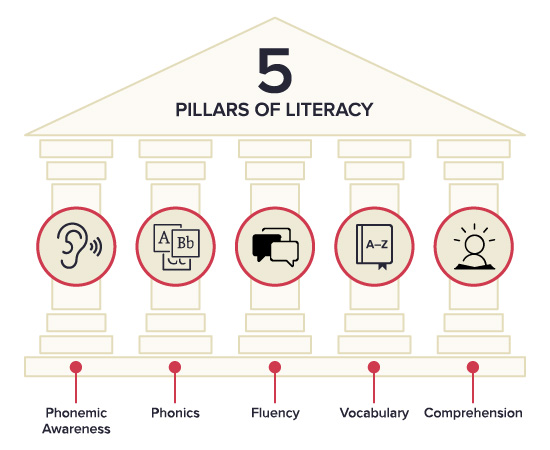
When students begin to read fluently, they are able to shift their cognitive resources from decoding to meaning-making. Their focus then centers around reading comprehension—we teachers say students progress from learning to read to reading to learn. They are able to mix and master phonological & phonemic awareness, phonics, fluency, vocabulary, and comprehension, the five pillars of the Science of Reading. These building blocks are essential for literacy development, affecting reading and writing across all subject areas. And reading skills are not just critical for academic success, but they are keys to personal empowerment, emotional wellbeing, and even social connection. UNESCO highlights how these fundamental literacy skills go far beyond classroom walls, and impact one’s life path: “Literacy empowers and liberates people.”
Effective reading fluency strategies for the classroom
There are many ways to support and improve reading fluency. Take a look at the reading fluency strategies below to determine how you might be able to use them with your whole class, in small collaborative groupwork, or one-on-one.
- Repeated reading: To help build automaticity, have students reread a short passage or the same story multiple times to master word recognition, speed, and expression
- Paired or partner reading: Take a collaborative approach and pair students up to take turns reading to one another as a form of low-stakes practice
- Modeled reading/read-alouds: Model how decoding and comprehension work together by exemplifying how to read expressively with emotion and tone to convey meaning and mood
- Wide reading: Encourage reading across a broad and diverse variety of texts (genres and formats) in order to build vocabulary and comprehension
- Explicit decoding instruction: Fill in gaps as necessary with targeted phonics instruction to bridge fluency and comprehension
Reading fluency activities that engage students
Reading fluency strategies can be routine and yet still engaging. Capitalize on the energy and excitement of your students as they gain the skills that will unlock a love of reading.
- Echo reading: Have your class or individual students repeat back sentences or phrases after you, the teacher, model it, emphasizing speed and style
- Reader’s theater: Bring a bit of dramatic flair to your reading instruction by encouraging your students to rehearse and perform scripts to build expressive reading
- Timed reading challenges: Offer quick challenges that are low-stakes yet help encourage individuals to self-monitor their progress over time
- Audio-supported reading: We all enjoy being read to, so don’t shy away from pairing students with a recorded or digital version of a text for a read-along reading session
- Fluency journals or logs: Promote student agency and ownership by having students track their own progress in individual journals or logs
Take a mixed methods approach to practicing and improving reading fluency by incorporating modeling, repeated readings, and lots of progress monitoring throughout your day (not just during your ELA block).
Reading fluency FAQs
What is the difference between literacy and fluency?
Simply put, literacy is the ability to read, write, and use numbers. Yet that simple definition is impactful to individuals’ livelihoods. Fluency is just one aspect of literacy and a key component in learning how to read.
What can I do for a student struggling with fluency?
Ongoing assessment is critical in diagnosing and addressing a student who is struggling with fluency. Different types of assessments can help pinpoint gaps and pain points so that you, as the teacher, can determine which strategies and interventions (MTSS) will be most effective.
How can I address the varying levels of fluency in my classroom?
It is a constant challenge for teachers to personalize instruction to meet individuals’ needs. There are a host of reading fluency and reading comprehension strategies that you can engage in with the whole class, in small collaborative groupwork, or one-on-one. Work with your colleagues to determine which reading supports and interventions you can align to the MTSS framework.
How can I support fluency with activities students can do outside of school?
Share generously with your students’ families when it comes to turnkey reading strategies or resources that will support fluency and other foundational literacy skills. Remember to encourage your families to read aloud, engage in repeated readings, and introduce wide reading with books they have at home or can borrow from a public library.
How can I encourage students to improve fluency if they dislike reading?
Most kids who dislike reading have become frustrated or disenchanted due to challenges they are having in learning to read. Use diagnostic assessments to determine the student’s baseline and to pinpoint learning gaps. You may need to first adjust the level of books the student is reading to build automaticity in fluency and comprehension to then begin to rebuild confidence and a love of reading.
How to monitor progress and adjust instruction to build stronger readers
According to the National Assessment of Educational Progress (NAEP), US reading scores have reached their lowest in 30 years. In schools, we need to proactively combat this decline by leveraging proven reading fluency and reading comprehension strategies supported by the Science of Reading. Regular progress monitoring will provide data and insights that you can use for grouping, differentiation, and interventions. Accelerated Reader is a one-stop solution that will support you in motivating, monitoring, and managing your students’ independent reading, while the myON platform provides students with instant access to engaging texts for anytime, anywhere reading practice.
Connect with an expert to explore Renaissance solutions for high-impact reading practice across pre-K‒12.