


Published: Jul 23, 2026 | Revised: Jul 24, 2026
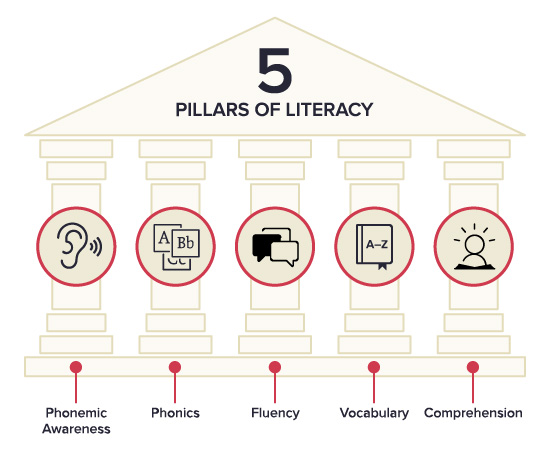
As educators, we want our students to develop a lifelong love of reading. However, that is no small feat given the complexities of literacy development. From day one of school, we begin to focus on five key pillars: phonemic awareness, phonics, fluency, vocabulary, and last but not least, comprehension.
While all five pillars require a rigorous approach with explicit and systematic instruction, reading comprehension too often is treated like a byproduct of the first four. Yet all students need to develop a dedicated toolbox of research-based reading comprehension strategies in order to flourish as independent readers; readers equipped with the skillsets to tackle complex texts they will encounter throughout their schooling and professional careers. Add to that toolbox a bit of contextualization through personal experiences, active imaginations, and astute questioning, and only then will you have students who truly appreciate the art of reading.
The importance of developing reading comprehension
“Reading comprehension” is one of those literary terms that most people recall from their elementary classroom days, when there was a marked emphasis—and grade—on not only understanding but making connections with what one was reading. This comprehensive skill set highlights an important transition for students moving from “learning to read” to “reading to learn.” Commonly around second or third grade, many kids build upon the fundamentals of phonics and begin to devour books, articles, and passages across the curriculum, eager to absorb how the written word can open their worlds.
Reading comprehension is not only one aspect of the Science of Reading (SoR), but a critical cornerstone. Reading comprehension not only unlocks foundational cognitive skills around critical thinking, but it ignites emotional growth, inspiring imaginations and building empathy. Our research has found that students who read an average 30+ minutes a day versus those who read 15 minutes a day between grades K–12 will encounter 12 million more words. Strong reading comprehension skills lead to higher academic success, and these core skills also propel students from the classroom into personal and professional achievement throughout their lives. Therefore, it is critical for teachers to model and reinforce some of the research-based reading comprehension strategies.
Six top science-backed reading comprehension strategies
Following are six proven strategies for strengthening students’ reading comprehension. As part of the discussion, you’ll also find links to resources in our popular Nearpod and Flocabulary instructional platforms that support these strategies in the classroom.
1. Activating prior knowledge
In order to help support the development of reading comprehension skills, it is important to provide context by helping students make connections to the content of the reading material. Many teachers start their lessons by activating students’ prior knowledge about a topic as a way to build off of skills or knowledge that students already have. This scaffolding sets students up for success by acknowledging that each comes with differing abilities, interests, and experiences. With younger students, making connections to one’s prior knowledge provides them with a concrete way to reengage and challenge themselves further.
For older students, activating their prior knowledge encourages them to make sense of the new content through their own lens, the way they see the world. For instance, many teachers use a K-W-L chart. The K represents what students may already KNOW about a particular topic, while the W makes them think about what they WANT to learn about that topic. These personal connections make for a deeper, more meaningful learning experience. Lastly, the L gives them an opportunity to list out all the new information they LEARNED to reflect on the new content. This type of graphic organizer scaffolds students’ thinking and empowers them to personalize the literacy experience, even when in a classroom chockfull of other readers.
TIP: Use Nearpod’s interactive Draw It feature to gather individuals’ or the whole-group’s thinking in KWL charts:
- Template: Social Studies: KWL Chart for grades K-12
- Template: ELA: KWL Chart for grades K-12
- Template: Science: KWL Chart for grades K-12
- Template: Life Skills: KWL Chart for grades K-12
- Template: Math: KWL Chart for grades K-12
2. Metacognition (thinking about thinking)
From the earliest days of reading stories aloud to children at bedtime, kids begin to build reading comprehension skills, bringing stories to life in their mind. They begin to deconstruct and construct words and sentence structures in order to assemble a collective meaning. As children transition into reading on their own, they begin an intricate process of attaching meaning to words and phrases, and part of their learning process is to recognize when something “doesn’t make sense.”
TIP: In Nearpod’s 21st Century Readiness program, you can find Social & Emotional Learning topic bundles of lessons, videos, and interactive activities about metacognition for all grade levels.
This metacognition—thinking about thinking—is a sophisticated reflection process where the student isn’t just angling to decode words, but striving to infer meaning. They do so by combining their background knowledge with vocabulary and cognitive strategies to evaluate new information. Teachers often share tricks and tips such as slowing down to digest meaning or rereading text for more clarity. Many elementary teachers use a five finger rule for reading: if a child struggles with four to five words on any given page, it is a sign that the book may be above their independent reading level and not a “just right” book that they can fully comprehend.
3. Visualizing and mental imagery
Imaginations are one of students’ most valued learning tools. Albert Einstein said, “Imagination is more important than knowledge. For knowledge is limited to all we now know and understand, while imagination embraces the entire world, and all there ever will be to know and understand.” And there are equally as many meaningful quotes about how and why reading unlocks a child’s world. Reading comprehension engages the mind’s eye, a critical tool in learning to write as well.
Students put meaning to words, phrases, and passages by building mental representations in their minds. Your chair that breaks in Goldilocks and the Three Bears may look quite different than the one I’m envisioning, yet we both are picturing a chair that can snap under weight. These mental movies in our mind can rival Hollywood blockbusters, and such visualization has learning prowess since it can help our memories recall facts and details. Plus, these rich representations explain why students may be more engaged in books than in a movie itself; the child is the director of the story arc.
TIP: In Flocabulary, students explore the Vocab Cards in every lesson, where they can draw an image that correlates with the word’s definition. Another idea is to play just the audio from a Flocab song and ask students to draw what they see in their own “mind’s eye” before showing the whole video.
4. Graphic organizers
As each and every word in reading contributes to the construction of meaning, students often can benefit from methods that help them make concrete connections. They can think through these relationships with graphic organizers, which visually help them analyze, synthesize, and evaluate the information. Graphic organizers are also referred to as mind maps, where students can diagram or categorize their thinking in various ways.
For instance, some popular graphic organizers are story arcs, where students can sequence the key events and story elements. Another is a Venn diagram, where they can compare and contrast information. Cause and effect charts help them think about the abstract relationship between events in a concrete, visual way. Graphic organizers help students manage information, think critically, and therefore, improve comprehension by literally inviting kids to illustrate their thinking.
TIP: Check out Nearpod’s Draw It templates for popular graphic organizers. If you have one of your own, simply upload it as a background image within the Draw It tool or challenge students to create their own!
5. Question-Answer Relationship (QAR)
QAR or the Question-Answer Relationship is yet another strategy students can lean on when reading texts or books. To move beyond literal comprehension, they begin to classify questions about the reading based on where the answers might lie, whether in the text itself or in the reader’s own head. They begin to evaluate the passage with more scrutiny and can learn to support their answers with evidence from the text in four distinct ways. They might look in the book to find keywords for answers that are “Right There,” or they may “Think and Search” across paragraphs to compile the information needed for an answer. Alternatively, the reader may rely on themselves to answer “On My Own” with just prior knowledge or combine personal experience with the author’s contributions to assemble an answer from the “Author and You.” These strategies strengthen the students’ ability to not only ask thoughtful questions, but to answer them too.
QAR relates to one’s Theory of Mind (ToM) as well. Theory of Mind develops at an early age and empowers individuals to realize that others have perspectives, beliefs, and opinions of their own—and they may be quite different from theirs. Theory of Mind involves some predicting, some “mind reading,” and some inferring. When it comes to literacy, there is quite a bit of research indicating a strong ToM is a strong predictor of reading comprehension success; in short, because the reader is able to understand and empathize with characters’ motives, emotions, and intentions. Conversely, exposure to more stories can also help students develop a stronger Theory of Mind by exposing them to diverse characters. Fiction in particular can feed this “virtuous circle” of the Theory of Mind and reading comprehension’s impact on one another.
6. Monitoring comprehension
A key strategy for building strong reading comprehension skills is supporting students in self-monitoring their own engagement. From summarizing to predicting, this metacognition practice means that students are actively checking in real time if they understand what they are reading; and if they don’t, they need to employ fix-up strategies like rereading or reading ahead to improve comprehension. To slow down and focus, students might annotate text as they read, underlining key words (ones they know or don’t know!), highlighting the use of impactful literary devices, or adding sticky notes with personal reflections or questions.
These practices underscore to students that everyone’s reading journey differs. What resonates with one reader might vary for another. Yet, at the same time, such monitoring skills encourage students to identify and focus on key story elements such as main ideas, character traits, and underlying themes.
How to teach reading comprehension by grade level
Reading comprehension is quite the intricate process, which takes active engagement that involves literal, inferential, and evaluative skills. In the primary grades (K–2), the focus tends to be on oral comprehension, as students listen to stories read aloud. Educators focus on those active verbs—those outcomes—that align to the foundational levels of Bloom’s Taxonomy: recall, describe, explain, compare, contrast, and summarize. Kids often rely on their comprehension skills to retell a story or to make predictions with a picture walk. These active listening and visualization techniques help students extract meaning from spoken language, build vocabulary, and make inferences.
For upper elementary students, instruction becomes more targeted around solidifying summarizing and inferring skills. Students are challenged to employ their higher-order thinking skills to analyze and synthesize information as they work to compare text structures or determine an author’s purpose. They begin to play with words in their own creative writing, making sentences more complex, acquiring more sophisticated vocabulary, and experimenting with figurative language.
And the honing of reading comprehension skills continues through middle and high school. These secondary students begin to focus on discipline-specific literacy as they explore various genres and tackle more complex text structures. Moving from fictional stories to nonfiction works, they begin to unpack and digest science journals, primary historical sources, and persuasive essays. They begin asserting (more definitively) their opinions and point of view as they analyze expository texts, evaluate arguments, and cross-check for biases.
Differentiating for diverse learners
Teachers often have a classroom full of developing readers, each with his or her own level of proficiency. And reading comprehension can be quite challenging for diverse learners. Emerging Bilingual students can struggle with English reading comprehension as they may have lower oral proficiency and limited vocabulary acquisition. Plus, these students shoulder the cognitive load of learning to read and write two separate and distinct languages.
Students with learning challenges like dyslexia also may face an uphill battle with reading comprehension since they have to work extra hard at decoding and fluency. Teachers, however, are masters at differentiating instruction, and students can amass strategies that help them build comprehension skills while reading (or even listening to) “just right” books. With a personalized approach, teachers can individualize instruction and share tips and tricks, whether those be strategies for visualization, employing multiple learning styles, and/or testing out adaptive technologies.
Tools and technology for educators to boost students’ reading comprehension
While reading comprehension is built through explicit instruction and practice, the right tools and technology can accelerate and deepen that process—especially when they connect foundational skills to meaningful reading experiences. The most effective literacy solutions don’t operate in silos; they create a connected experience where assessment, instruction, practice, and reading experience all work together to strengthen comprehension.
Phonics screening and diagnostic tools
Strong comprehension starts with a solid foundation. Screening and diagnostic tools—such as Star Phonics and Star Early Literacy—help educators identify gaps in phonemic awareness, phonics, and early literacy skills that may be preventing students from fully understanding a text. With clear insight into student readiness, teachers can take targeted action to ensure students are not just decoding words, but making meaning from them.
Adaptive foundational literacy practice
Once gaps are identified, adaptive practice tools like Lalilo and Freckle provide personalized pathways for building essential skills such as decoding, fluency, and vocabulary. By meeting students at their individual levels, these tools reduce cognitive overload—allowing students to focus more energy on comprehension rather than struggling through the mechanics of reading.
Interactive reading platforms
Access to meaningful, appropriately leveled texts is critical for developing comprehension. Digital reading platforms like myON give students access to a wide range of engaging texts while supporting comprehension through embedded scaffolds, knowledge-building opportunities, and progress monitoring. As students read more—and read content aligned to their interests and level—they naturally build the background knowledge and vocabulary essential for deep understanding.
To reinforce comprehension and ensure accountability, tools like Accelerated Reader allow students to take quizzes on the texts they’ve read, helping educators gauge how well students understood key ideas, details, and themes. This combination of authentic reading practice and immediate feedback helps students stay engaged while strengthening their ability to comprehend and retain what they read.
Gamified literacy experiences
Engagement plays a powerful role in comprehension. Gamified literacy experiences, such as those found in Freckle, motivate students to practice consistently while reinforcing key literacy skills. When students are actively engaged and invested, they are more likely to apply comprehension strategies like summarizing, predicting, and questioning—leading to stronger overall understanding.
AI-powered tools for instruction and differentiation
AI is transforming how educators support reading comprehension by making differentiation more immediate and actionable. AI tools within Nearpod allow teachers to generate comprehension questions, adjust reading levels, and create interactive lessons in real time. This enables educators to quickly tailor instruction to student needs—supporting deeper engagement, more meaningful discussions, and stronger comprehension outcomes during instruction, not just after.
When these tools are part of a connected literacy ecosystem—where assessment informs instruction, and instruction connects directly to practice and reading—educators can more effectively support every student in building strong, lasting reading comprehension skills.
If you’d like to continue the conversation, or if you’d like to arrange a personalized walkthrough of any of these solutions for your team, please reach out.
Additional reading comprehension FAQs
What are the five types of reading comprehension?
The five core types of reading comprehension are:
- Lexical comprehension: Understanding key vocabulary’s definitions in relation to the text
- Literal comprehension: Recalling the who, what, when, where, and why of the text, often said to be reading on the lines
- Inferential comprehension (or interpretive comprehension): Drawing conclusions around the use of figurative language, otherwise known as reading between the lines
- Evaluative comprehension (applied or critical comprehension): Connecting the text to real-life experiences by reading beyond the lines and asking thoughtful questions
- Affective comprehension: Recognizing that text impacts human emotions for both the characters and in the reader’s real life
How often should I explicitly teach comprehension strategies?
Comprehension strategies should be continuously reinforced and scaffolded across the curriculum. These skills can be built with repeated instances of practice. However, students also need to form a lifelong love of reading. Therefore, literacy instruction should not ever make reading a chore.
Can a student have good decoding skills but poor comprehension?
Definitely (unfortunately). Students can have outstanding decoding skills, which makes them sound like fluid readers. However, if they don’t understand what each word means and how the words work together, then the students won’t connect to the content in any meaningful way.
How does Renaissance help improve reading comprehension?
Renaissance Learning has a suite of reading programs and tools that work together to meet students where they are and propel them forward. With such adaptive technologies, students can focus on reinforcing particular skills to better build their own toolbox of strategies, whether reading in a classroom at school or diving into a book in their house at bedtime. This individualized skills practice is explicit to standards, targeted and based on assessment data, adaptive to provide immediate feedback, and aligned to classroom instruction.
See how Renaissance Learning supports school administrators and educators with comprehensive literacy solutions.